Mycology 101
What Are Magic Mushrooms? A Complete Guide to Psilocybin
Oct
Key takeaways
- Magic mushrooms are fungi that produce psilocybin, a naturally occurring psychedelic compound.
- The body converts psilocybin to psilocin, which acts mainly on serotonin 5-HT2A receptors.
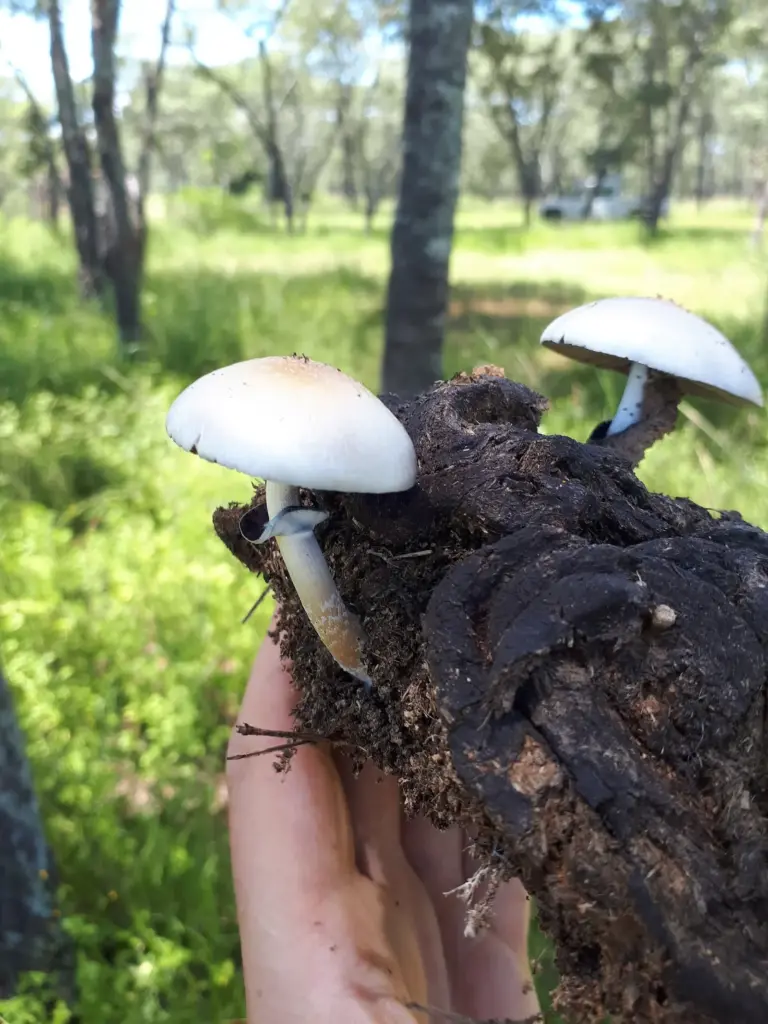
- Over 180 species contain psilocybin; Psilocybe cubensis is the most widely cultivated.
- Effects typically last 4 to 6 hours and depend heavily on dose, set and setting.
What is psilocybin?
Psilocybin is a naturally occurring tryptamine alkaloid produced by more than 180 species of fungi. Chemically it is a prodrug: on its own it does very little, but once ingested the body removes a phosphate group and converts it into psilocin, the compound responsible for the psychedelic experience.
Humans have used these mushrooms for millennia. Mesoamerican cultures called them teonanácatl, often translated as “flesh of the gods”, and they reached Western awareness in 1957 through R. Gordon Wasson’s account in Life magazine.
How it works in the brain
Psilocin closely resembles serotonin and binds strongly to the 5-HT2A receptor, especially in the cortex. Brain imaging studies show reduced activity in the default mode network, the system associated with our sense of self, alongside increased communication between regions that normally rarely talk to each other.
Common species
- Psilocybe cubensis: the most cultivated species, with strains like Golden Teacher and Blue Meanie.
- Psilocybe cyanescens: the potent wavy caps of wood-chip beds.
- Psilocybe semilanceata: liberty caps, Europe’s classic meadow mushroom.
Effects and timeline
Onset usually begins 20 to 45 minutes after ingestion, peaks around 90 to 120 minutes, and resolves over 4 to 6 hours. See our dosage guide for what each range typically feels like.
Safety and harm reduction
Psilocybin has low physiological toxicity and is not considered addictive, but psychological risks are real. Avoid it if you or close family have a history of psychosis or bipolar disorder, and never combine it with lithium, tramadol or MAOIs.
Legal status
Psilocybin remains controlled in most countries, though a growing number of jurisdictions have decriminalized or regulated its use. Always check the laws where you live.